South African-registered · Based in Cape Town · Online worldwide
A Different Kind of Support
for the Adolescent Years
Grounded mentorship and reflective counselling for teenage boys aged 12 to 17. This page also explains how parents are involved.
Your son is not broken.He may just be unsupported at a stage of life that was never meant to be crossed alone.
Adolescence has always been a difficult stretch of life.
What is different now is the world a teenager is moving through. Phones, comparison, online life, conflicting messages about who he is supposed to be, and fewer steady adult relationships outside the home than this stage of life has historically required.
At this age, parents are still the people who matter most. But often what helps a young person settle into himself is a second trusted adult relationship. Someone outside the family.
Someone who can meet him with honesty rather than worry, and who does not also carry the weight of being his parent.
This work exists to provide that relationship.
ASCHP Registered
In person & online
Based in Cape Town
Ages 12 to 17

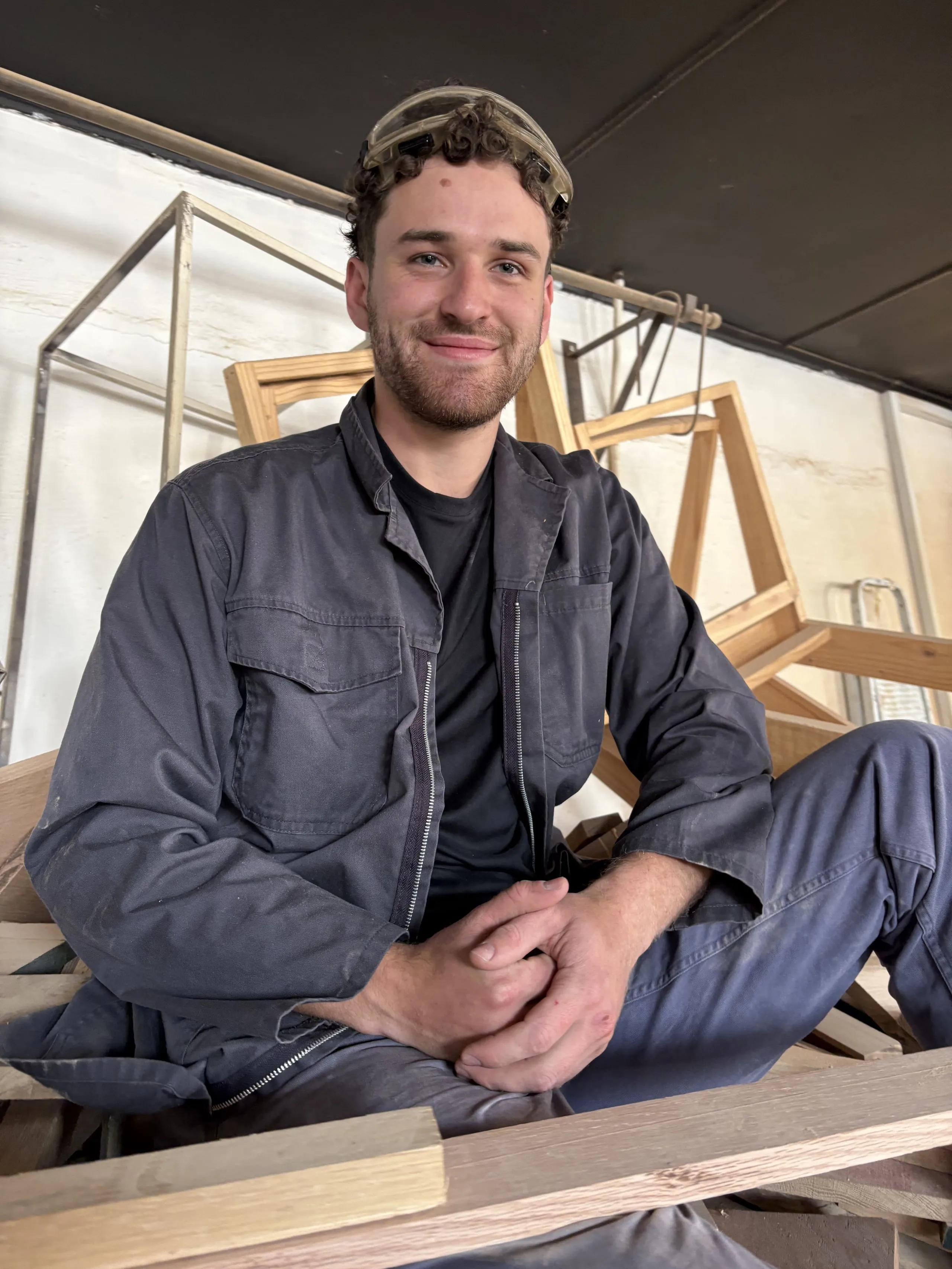
Michael Kaplan
ASCHP Registered Wellness Counsellor
10+
years working directly with adolescent and young adult men
Hundreds
of one-on-one and group sessions facilitated across Cape Town and online
Trained under
a clinical and forensic psychologist in adolescent developmental work
What Parents Are Often Seeing
Many parents can sense when something in their son's life is not fully settling, even when nothing dramatic has happened.
The signs are usually easy to miss at first.
A door that stays closed.
Conversations that used to be easy and no longer are.
Much of this is a completely normal part of modern adolescence and will pass on its own.
But some of it is a signal that a young person does not yet have enough space outside himself to think honestly about what he is going through. Parents can provide a great deal of that space. They cannot always provide all of it.
This work exists to provide one of those spaces.

The question is not
"what is wrong with him?"
Often the better question is
"what has he not yet been given?"
It Has Always Taken More Than Parents
Adolescence Was Never Meant To Be Navigated Alone
For most of human history, the move into adulthood did not happen inside a single household. A young person grew up alongside uncles, older cousins, neighbours, teachers, coaches, and other adults who took an interest in his life. Many of those relationships have quietly disappeared from modern family life.
What remains is the parent or parents.
One or two adults trying to be everything a teenager needs, at the age where he is also pulling away. Protector. Authority. The person who notices the mood at dinner. The person who knows the homework deadlines. That is a great deal for any family to hold.
Another grounded adult relationship does not replace the role of a parent. Often it strengthens it.
A teenager will sometimes say things to a trusted outside adult that he is not ready to say at home. Not because the parent has failed. Because the relationship with a parent carries history, dependence, and the weight of being known, all of which a teenager is in the middle of working out.
A second relationship gives him somewhere to put the parts of himself he is still figuring out. The parent gets to stay the parent.
This work exists to help provide one of those relationships.

The Process
What The Mentorship Offers
Every teenager arrives different. Different temperament, different family, different version of what is hard.
The mentorship is shaped around the individual young person, inside a steady structure of consistency, honesty, and reflection.
The relationship itself is part of the work.
Many teenagers have very few places where they can think out loud without being judged, corrected, or asked what they are going to do about it. That space is most of what is missing.
Over time, having one steady relationship of that kind can help a young person slow down enough to think honestly about himself, the pressures he is moving through, and the kind of person he is becoming.
Typical Structure
Sessions are held online or in person in Newlands, Cape Town, by arrangement.
Individual sessions are approximately 60 minutes.
Frequency is usually weekly or fortnightly depending on the situation.
Parent reflection sessions may be included where useful.
The work is developmental and relational rather than crisis-focused.
Emergency psychological care and acute psychiatric intervention sit outside the scope of this work and are referred to appropriately licensed professionals.
The aim is not to create dependence on mentorship. The aim is helping a young person become more honest with himself, more capable of handling his own life, and more grounded in the direction he is heading.
About Michael

Michael Kaplan
ASCHP Registered Wellness Counsellor
Much of what shapes an adolescent's life happens in the spaces where he feels he cannot speak honestly.
“I do this work because I needed it myself, and I know what it cost not to have it.”
I believe he is well suited to counselling and mentorship work, particularly with young men navigating identity, direction, emotional difficulty, and the transition into adulthood. I would recommend him with confidence.

Reflections
Reflections shared with permission from people who have engaged with this work directly.
Often, what changes first is not behaviour alone. It is the feeling that a young man is finally beginning to genuinely reconnect with himself.
Personal Reflection
“Michael has a remarkable gift for holding space. He has guided me through some of my toughest moments, helping me find my voice and feel comfortable in situations I once found overwhelming. Every process we've worked through has left me feeling clearer and more at peace.”
“What strikes me most about him is his integrity. Whether one-on-one or in a group, his care is genuine and never for his own benefit. He is a pure soul who truly wants to see people thrive. I'm so grateful for his availability and his dedication to helping me improve my life.”
Jacob S. · Has worked with Michael across adolescence and into adulthood

Professional Reference
“I have known Michael for many years through his involvement with Boys to Men, first as a participant in the work and later in leadership and facilitation roles. Over time, I have watched him develop into a capable, thoughtful, and committed facilitator with a genuine ability to work with people in a grounded and sincere way.”
“He brings presence, emotional intelligence, maturity, and a strong capacity to engage honestly with difficult human experiences. I have consistently found him to approach this work with integrity, responsibility, and real care for the people he works with.”
Bernard Altman · Clinical and Forensic Psychologist · Founder of Boys to Men
Some changes only become visible over time. That is often how real development announces itself.
Who this work is often helpful for
Not every teenager responds to the same kind of support. Good developmental work depends on trust, readiness, and the gradual formation of a relationship where honest conversation becomes possible.
This work may be supportive for a teenager who is:
Going through a difficult period at school, at home, or socially
Withdrawn, reactive, emotionally shut down, or difficult to meaningfully reach
Intelligent and capable, but struggling with motivation, consistency, or direction
Losing confidence in himself or unsure how to express what he is carrying internally
Retreating into isolation, distraction, excessive gaming, or online immersion
Trying to work out who he is becoming and how he wants to move through the world
Needing grounded guidance, challenge, and reflection without shame, ideology, or performance pressure
There is no single formula for adolescent development. Part of working responsibly is recognising when this kind of relationship may be helpful, and when another form of support would be more appropriate.
Clear boundaries from the beginning
Confidentiality, Safeguarding, and Parent Involvement
What stays private
The detail of ordinary sessions is not reported back to parents. A teenage boy needs enough privacy to speak honestly and build a real working relationship.
When parents are involved
Parents are included around goals, practical arrangements, and broad progress where useful. Wherever possible, this is discussed with the young person rather than done around him.
Limits to confidentiality
Privacy has limits where there is serious risk of harm, suspected abuse or neglect, or another legal duty to disclose. Safety comes first, and only necessary information is shared.
These boundaries are explained before the work begins so that both the young person and his parents know what to expect. Read the fuller guide to confidentiality in mentoring for teenage boys.
What parents can realistically expect
This kind of work is a gradual process, not an overnight transformation.
Often the earliest shifts are subtle. Conversations that were previously closed begin to open. Defensiveness may soften slightly. A young person becomes a little more reflective, more communicative, or more willing to engage honestly with what is happening in his life.
Over time, that can develop into greater emotional steadiness, clearer self-awareness, improved responsibility, and a stronger sense of direction and self-respect.
Progress is rarely perfectly linear, especially during adolescence. The aim is not perfection, but helping a young person gradually develop a healthier relationship with himself, with others, and with the responsibilities of adult life.
If you feel your son may benefit from this kind of support, the parent consultation is usually the best first step.
Who This Is Not The Right Fit For
Honesty about who this work serves well requires honesty about who it does not.
Emergency psychological care or acute psychiatric intervention is required
Severe addiction or acute crisis care is the primary concern
The expectation is rapid behavioural compliance without relational process
A parent is seeking control over the young person rather than developmental support
The young person is completely unwilling to engage in any form of conversation or reflection
The hope is for motivation tactics, discipline systems, or high-performance coaching alone
Spiritual ideology or dogmatic belief systems are being sought
If any of these describe your situation, the parental consultation is still worth having, even if only to clarify what would actually help and to refer appropriately. Honesty about fit is part of the practice.
The goal is not to create dependence on mentorship. It is to help him become more capable of standing within his own life.

Mentorship Structure and Investment
Meaningful developmental work requires consistency, trust, honesty, and time. This mentorship is approached as a committed relational process, not a once-off intervention.
The aim is not short-term motivation. The aim is long-term developmental grounding.
Not yet sure whether to book the consultation? A free 15-minute fit call is available before any paid step.
Parent Consultation
Charged as approx. $35 USD via PayPal
A dedicated conversation for parents to discuss concerns, ask questions, understand the approach, and determine whether this work may be the right fit for your son and family.
Individual Sessions
Weekly or fortnightly · In person or online
Individual mentorship and reflective counselling focused on emotional development, responsibility, self-awareness, direction, and practical life integration.
5-Session Commitment
R680 per session · Five 60-minute sessions
For families seeking a more consistent developmental container. Five sessions intended for sustained mentorship work, allowing trust and meaningful momentum to develop over time.
Self-awareness, emotional regulation, and genuine behavioural change tend to deepen gradually through consistent relational work.
A small number of reduced-rate spaces may occasionally be available for families where the standard investment is genuinely prohibitive. This can be discussed directly during the parent consultation.
Parent consultation · Paid · 45 minutes
Book a Parent Consultation
R600 · 45 minutes · Online
Charged as approx. $35 USD via PayPal at the prevailing exchange rate.
A space for parents to slow down, discuss concerns, ask questions, and determine whether this work may be the right fit for your son and family.
Reaching out is not a failure. It is the response a thoughtful parent makes when they recognise that no one or two people can provide everything a young person needs to grow well. Mentorship adds an outside perspective at a stage of life where outside perspective has always mattered.
If the calendar does not load, open the parent consultation booking page directly.
If a slot doesn't suit your timezone or schedule, reach out via the contact form or WhatsApp.
Free · 15 minutes · For parents
Book a free 15-minute fit call
A short conversation for parents who are not yet sure whether the parent consultation is the right next step, or who want to ask a few questions before booking a paid session. No commitment beyond the call.
If the calendar does not load, open the fit call booking page directly.
Scope and what this is not
Sangham is supportive wellness counselling and developmental mentorship registered under the ASCHP. It is distinct from clinical psychology, psychiatry, psychotherapy, and from crisis or emergency mental health care. If a young person is in acute crisis, is at risk, or requires clinical assessment, Michael will say so directly and refer to an appropriate professional. Honesty about scope is part of the work.
Outside clinical crisis care · ASCHP Reg. 10559
Full scope and ethicsFrequently Asked Questions
It is reasonable to want answers before beginning a developmental relationship with someone outside your family. The questions below cover what parents most often want to know.
Is this therapy?
No.
This work is better understood as developmental mentorship combined with reflective counselling. While emotional reflection, self-awareness, and psychological insight are certainly part of the process, the work is not positioned as formal psychotherapy or clinical treatment.
The emphasis is developmental and relational: helping a young person build capacities he can carry into the rest of his life.
What ages do you generally work with?
This page focuses on mentorship for young men aged 12 to 17. For young men aged 18 to 25, see the dedicated young-men page, which covers the same approach adapted to that older stage.
View mentoring for young menDoes my son need to be interested in meditation?
No.
The work is grounded, practical, and psychologically oriented. Where contemplative practices are introduced, they are approached carefully as tools for awareness, nervous system regulation, grounding, emotional reflection, and self-observation.
Many sessions involve no formal contemplative practice at all.
What if my son is resistant or unwilling?
Some hesitation is normal, especially early on. Adolescents are often understandably cautious about opening up to someone unfamiliar. The early work is quiet, patient, and relational.
That said, some minimal willingness to engage in conversation and reflection is generally necessary for meaningful mentorship to develop.
How involved are parents in the process?
Parents are important participants in the broader developmental environment surrounding a young person. At the same time, mentorship depends on enough privacy for honest conversation to become possible.
Where appropriate, parents may be included in periodic reflective conversations while still respecting the integrity and confidentiality of the mentorship relationship itself.
How long does the process usually last?
There is no fixed timeline.
Some teenagers benefit from shorter periods of focused support. Others benefit from longer-term mentorship as they move through different stages of adolescence. The work is developmental, and the pace is set by what the situation calls for.
What kinds of issues do parents usually bring into this work?
Every individual is different, but common themes include withdrawal, conflict at home, school pressure, loss of motivation, screen dependence, low confidence, emotional volatility, peer pressure, and the broader difficulty of growing toward adulthood.
Is this a replacement for psychiatric or specialist psychological care?
No.
This work supports developmental and relational growth. Acute psychiatric intervention, crisis management, addiction treatment, and specialist clinical care belong with appropriately licensed professionals, and a referral can be discussed where helpful.

Adolescence does not wait.
The right relationship at the right stage can shift the direction a young person is heading.