Counselling in Cape Town and online
Counselling begins with the relationship.
Not with a method chosen in advance. Different people need different things, and the same person needs different things at different times, so the work is shaped around you rather than around a technique.
The aim is to understand yourself more clearly, move through what has been holding you back, and build a life that feels increasingly your own.
Private, self-funded counselling. R850 per 60-minute session, or R3,400 for five sessions (R680 per session).
The introductory 15-minute fit call is free, with no obligation to continue.
A free first conversation about fit. Ongoing counselling is a paid service.

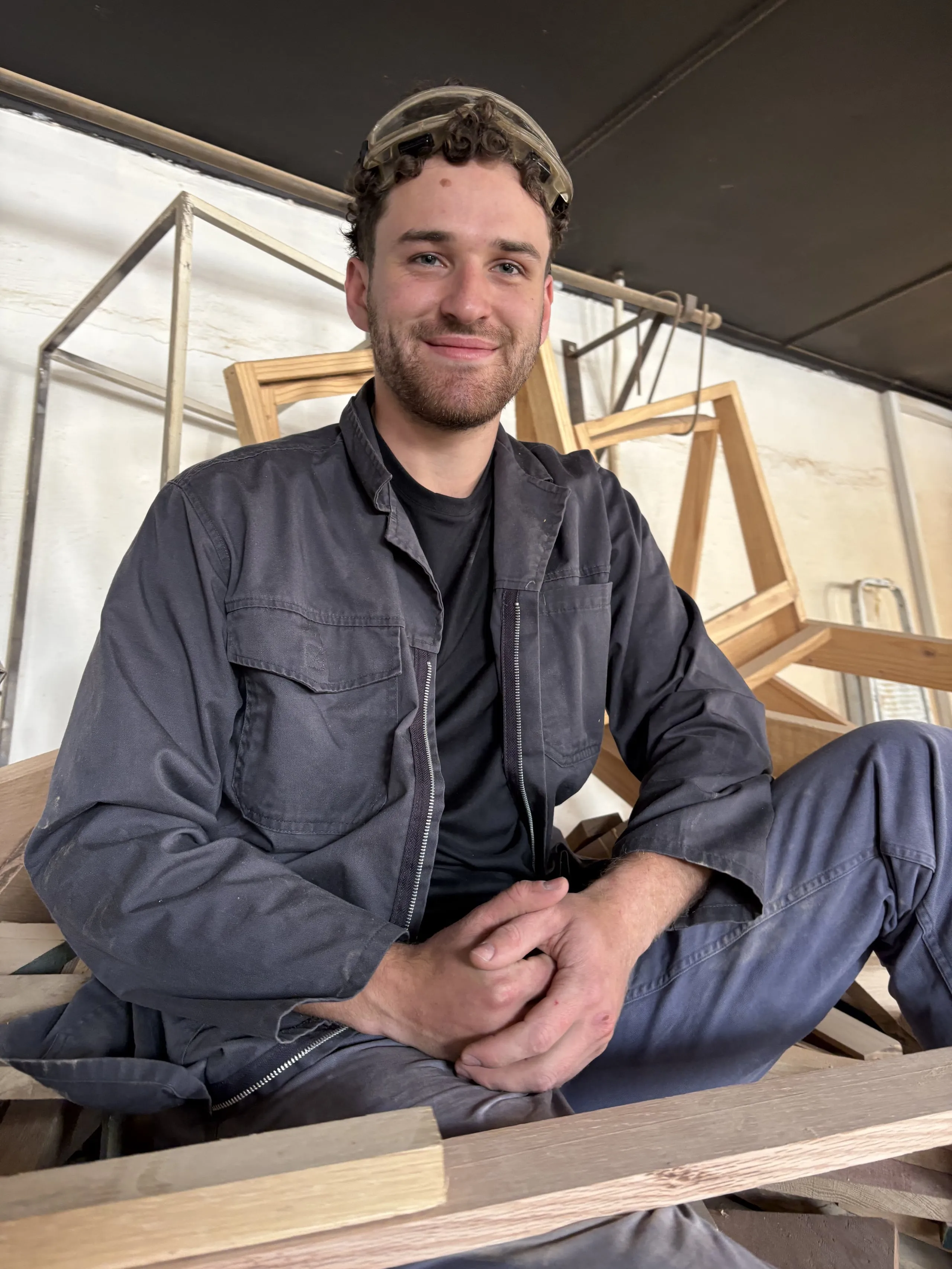
Michael Kaplan
BA Psychology · ASCHP-registered Wellness Counsellor (Reg. 10559)
In person in Newlands, Cape Town
Online worldwide
10+ Years
of developmental, relational and group work
BA Psychology
and registration as a Wellness Counsellor with the ASCHP (Reg. 10559)
Newlands & Online
in person in Cape Town's Southern Suburbs, or by video call from anywhere
What might bring you here
People do not always arrive with a diagnosis or a clearly defined problem. More often there is a growing sense that something is not working as well as it could, and a suspicion that it will not resolve on its own.
Select any that feels familiar to read more.
You understand the pattern, and it still repeats.
You can explain it clearly afterwards, sometimes while it is happening, and that has not been enough to change it.
From the outside, things look fine.
You are functioning well by most measures while privately feeling disconnected, restless, or unsure what all the effort is for.
You know what needs to change, and still cannot do it.
The decision is obvious in principle. Something in you will not move, and pushing harder has stopped working.
The same reactions keep surfacing in your relationships.
Different people, different circumstances, and the same version of you surfacing again and again, one you do not much like.
Something that ended is still shaping the present.
It is over in practical terms, but it still sets how much you trust, how quickly you become defensive, and how safe it feels to depend on anyone.
The frameworks that used to give direction no longer convince you.
Work, adulthood, a relationship or family life has changed, and what once made sense of it does not any more.
None of this has to amount to a crisis. Counselling can just as well begin with the recognition that life could be more honest, more connected and more your own than it currently feels. Working out what actually needs attention is part of the first conversation.
If any of that sounds like where you are, a short conversation is the easiest place to start.
Why the relationship comes first
Every school of counselling has its own theories and techniques, and those differences matter. But underneath them sits something more basic: the relationship between the person seeking help and the person sitting across from them. Across decades of psychotherapy research, the quality of that therapeutic alliance has repeatedly been associated with better outcomes across very different forms of treatment.
That makes intuitive sense. It is hard to explore the parts of yourself you usually keep hidden with someone you do not feel safe with, hard to be challenged by someone you do not trust, and hard for anyone to know what might genuinely help you before they understand who you are.
So the relationship is not the setting in which technique gets delivered. It is part of the work. It gives you somewhere to slow down, notice what keeps happening, say something you have never quite managed to put into words, and test assumptions you have carried for years. Support of that kind does not mean agreement. Sometimes it means asking a question you would rather avoid, or helping you stay with something long enough to understand it properly.
There is a further reason it matters. The patterns people struggle with elsewhere tend to appear, quietly, inside counselling itself. A tendency to please, to withdraw, to hide uncertainty, to over-explain, or to struggle to ask directly for what is needed becomes visible between us. Because this relationship has clearer boundaries and fewer of the usual social stakes, it is a relatively safe place to notice those habits and try something different. Counselling is not only somewhere to talk about relationships. It is a relationship in which new ways of relating can be practised.
The relationship is not only the container the work happens in. A good deal of the time, it is the work.

Counselling Reflection
It was my great luck to encounter Michael's magical counselling sessions. I was really in need of a trusted guide with me for my inner work and the sessions really helped me navigate myself, along with his help, and reach solutions that were effective and long-term.

Change begins differently when you no longer have to work everything out alone.
No two people need the same thing
The same approach will not serve every person, and even for one person, what helps at one stage of life can be quite wrong at another.
Sometimes the work is practical. There is a decision to make, a boundary to set, a pattern to interrupt before it runs its usual course. Sometimes it is slower, because something painful from the past still shapes relationships and self-worth even when you understand where it came from. Sometimes what is needed is more awareness of emotion or of the body, or learning to stay with discomfort rather than escaping it. Sometimes it is grief, or identity, or the question of what kind of life you actually want to build.
Interventions should serve the person, rather than requiring the person to fit the intervention.
So the work is integrative and responsive. Psychological reflection, behavioural experiments, mindfulness, attention training, body awareness, journalling or breath practices may each be useful in the right circumstances. They are tools rather than doctrines, and no interest in contemplative practice is required for any of them. The question is always the same: what would actually be useful here, for this person, now?
From insight to lived change
Understanding yourself matters, but insight on its own has surprisingly little power in the moments where it would count most. Someone may know perfectly well that they avoid conflict, become defensive when they feel exposed, procrastinate when something matters, or lose themselves in other people's needs. The difficulty is rarely recognising the pattern. It is finding what allows a different response while the old one is already unfolding.
So much of the work stays close to lived experience. We look at what tends to happen just before a familiar reaction, what you feel in the body, which assumptions arrive almost automatically, and what the response costs you afterwards. The purpose is not to reduce everything to a theory, but to understand a pattern precisely enough that there is somewhere practical to intervene.
That intervention is often very small: having one conversation differently, noticing the point at which anxiety turns into avoidance, setting a boundary before resentment builds, or testing a belief that has quietly governed your behaviour for years. What happens outside the room then becomes part of the next conversation. Over time the process becomes less about collecting insights and more about turning understanding into freedom of action.
The measure of this work is not how someone feels during a session, but how they function in the days and weeks that follow.
The first step is a fifteen-minute call, not a commitment.
About Michael
Michael Kaplan
BA Psychology · ASCHP-registered Wellness Counsellor (Reg. 10559)
I am an ASCHP-registered Wellness Counsellor with an academic background in psychology and more than a decade of experience in developmental, relational and group work.
Much of my earlier work was with boys and young men through Boys to Men in Cape Town, where I spent years facilitating group processes around identity, relationships, responsibility and the transition into adulthood. During that period I worked under the guidance of clinical psychologist Bernard Altman, whose influence shaped a great deal of how I now think about relationship, honesty and developmental context in work with people.

I believe he is well suited to counselling and mentorship work, particularly with young men navigating identity, direction, emotional difficulty, and the transition into adulthood. I would recommend him with confidence.
Bernard Altman, Clinical and Forensic Psychologist · Founder of Boys to Men
Meditation, retreat and periods of traditional study in India have been a significant part of my life for a number of years. I do not assume that counselling should be spiritual, and many of the people I work with have no particular interest in contemplative practice at all. What the background has given me is another set of lenses for understanding attention, suffering, identity and habit.
I am wary of reducing a person to a single framework. Psychology illuminates some things very well. Relationships, family history, behaviour, culture, the body, values and meaning may illuminate others. Good counselling often means moving between those perspectives without forcing the person into any one of them.
What matters to me is that the work stays grounded in the actual life of the person in front of me.
Reflections from people who have worked with Michael
Shared with permission.
Counselling Reflection
I really enjoyed my time with him and would recommend his services to anyone seeking a relaxed yet professional counselling experience.
Nikhita Leela
Counselling client
Personal Reflection
Michael has a remarkable gift for holding space. He has guided me through some of my toughest moments, helping me find my voice and feel comfortable in situations I once found overwhelming. Every process we've worked through has left me feeling clearer and more at peace.
Jacob S.
Has worked with Michael across adolescence and into adulthood

Professional Reference
He brings presence, emotional intelligence, maturity, and a strong capacity to engage honestly with difficult human experiences. I would recommend him with confidence.
Bernard Altman
Clinical and Forensic Psychologist · Founder of Boys to Men
If you would like to see whether this is a good fit, the next step is a conversation.
In Cape Town or online
In person
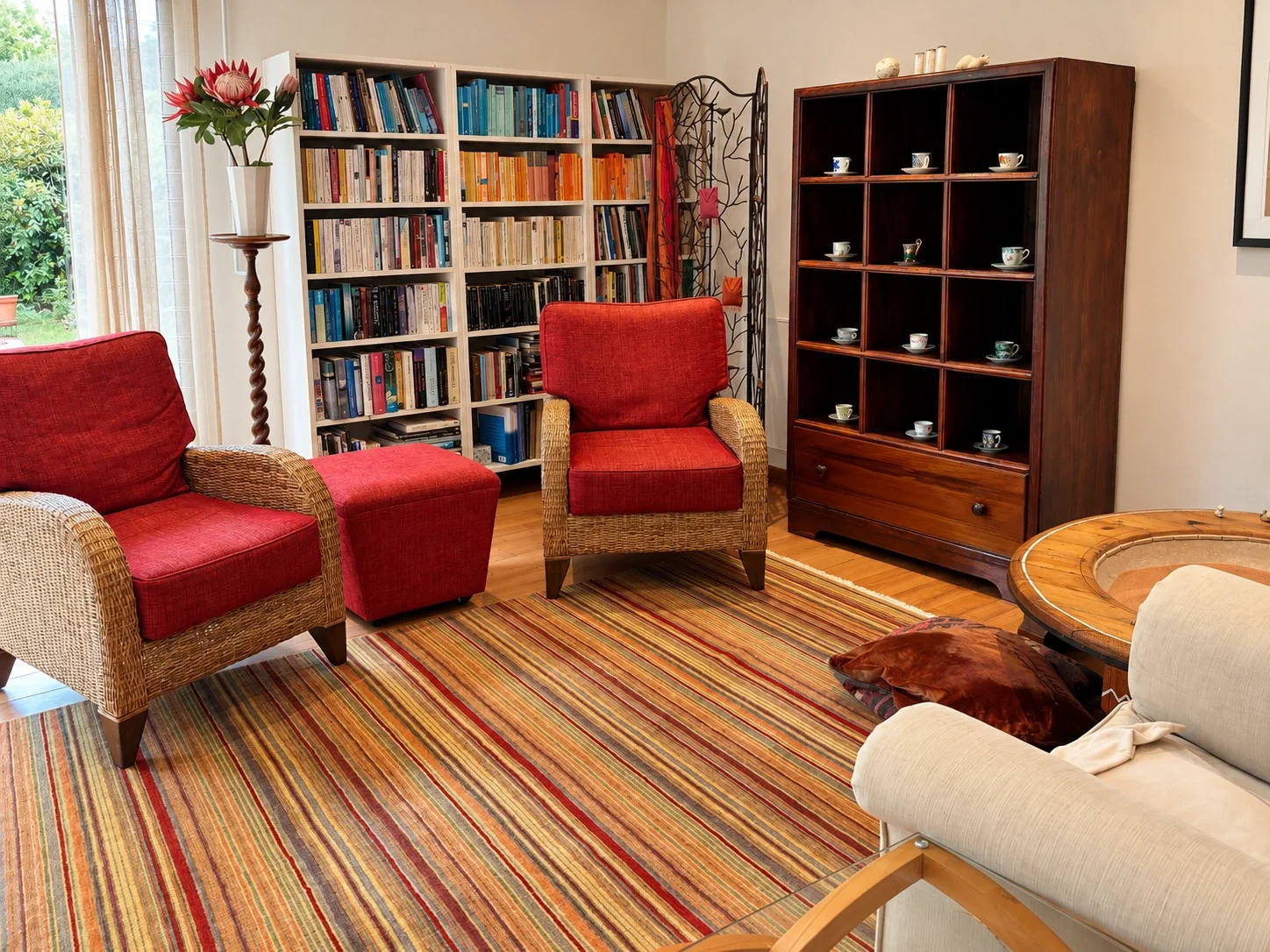
For people based in Cape Town, I see clients at a private consulting room in Newlands, in the Southern Suburbs. Some people find that a defined place, at a defined time, makes it easier to give the conversation their full attention. Appointments are arranged in advance, and the address is shared privately once one is confirmed.
Online
Sessions are equally available by video call, for people elsewhere in South Africa and further afield, and for anyone who finds remote work more practical. It can be easier to sustain around work, travel or family life, and some people settle into the conversation more quickly from their own environment.
The substance of the work does not change with the format. What matters is whether the relationship is useful, and whether the process is moving you towards what you came for.
The work is the same. The room changes.
A quiet room in Newlands
Comfortable, private, with natural light and a garden outlook, and set apart from the demands of home and work.



The aim is not simply to feel better in the room. It is to build a life outside it that you are increasingly glad to wake up to.
Beginning the process
The first step is a free 15-minute fit call: a short conversation about what is bringing you here and whether my way of working suits what you need. If the issue falls outside my scope, or another kind of support would serve you better, I will say so directly.
A contained first piece of work
Many people begin with a five-session process. The work moves from clarifying what is actually happening, to identifying what maintains it, to introducing adjustments and testing how they hold, ending with a review of what has shifted.
Mapping
Understanding the current patterns and the specific places where things feel stuck.
Identifying
Seeing what actually maintains them, beyond the familiar explanation.
Intervening
Introducing adjustments chosen for the situation: a change in behaviour, a way of attending to experience, or a practical exercise.
Applying
Testing those changes in real time, and seeing what holds and what the real work turns out to be.
Consolidating
Reviewing what has shifted and clarifying what, if anything, is useful to continue.
This is a structure, not a promise of resolution in five sessions. Some people come for a focused period; others find a longer relationship useful as different parts of their life connect. Read the fuller process overview.
For teenage boys, the starting process includes a parent consultation before work with the young person begins. The teenage mentoring page explains that pathway.
Fees
Start here
Free
15-minute fit call
A low-pressure conversation to see whether working together makes sense. No obligation to continue.
Individual session
R850
60 minutes · in person or online
A flexible pay-as-you-go option, session by session.
Five-session process
R680 per session
when five sessions are paid in advance
R3,400 total
A contained piece of work with a review at the end, at a lower rate per session.
Sessions are usually weekly or fortnightly, depending on what is useful and practical. A limited number of reduced-rate spaces may be available where the standard fee is genuinely prohibitive. If cost is a real barrier, mention it when reaching out and it can be discussed privately.
Sessions are self-funded and are not submitted directly to medical aid. For parents of teenage boys, the separate parent consultation is R600 for 45 minutes.
Start with the free call, or ask a question first. Either is fine.
Other ways of working together
I work with adults generally, and have particular experience with boys and young men, and with people involved in contemplative practice.
Counselling for adults
The main counselling offer, for adults looking at recurring patterns, relationships, or a difficult stretch of life.
Read more →Mentoring for young men
Reflective counselling and developmental mentorship for men aged 18 to 25: direction, identity, responsibility, emotional shutdown.
Read more →Mentoring for teenage boys
For boys aged 12 to 17. The service is for the young person, with a clear process for parent involvement.
Read more →Counselling for meditators
For practice-related questions, difficult experiences, and integrating contemplative insight into ordinary life.
Read more →Enquiring on behalf of an organisation rather than for yourself? There is a separate pathway for employers funding counselling for their people, and a facilitated group programme for NGOs and community organisations.
Scope of practice
This is supportive Wellness Counselling under ASCHP registration. It is distinct from clinical psychology, psychotherapy, psychiatry and medical treatment, and it does not include diagnosis of psychiatric conditions or the prescribing of medication.
There are situations in which specialist psychological, psychiatric, addiction, crisis or medical care is more appropriate, and recognising those limits is part of responsible counselling. Where another form of support would serve you better, I will say so and help you think through a next step. If you need urgent help, or are in immediate danger, please contact an emergency service rather than waiting for a counselling appointment.
Confidentiality, appropriate boundaries and respect for your autonomy are foundational to the process. Read the full scope and ethics.
Questions before you begin
Where are in-person sessions held?
In Newlands, in the Southern Suburbs of Cape Town, in the private consulting room shown on this page. Appointments are arranged in advance. The exact address and arrival details are shared privately when your appointment is confirmed.
Do you work in one particular therapeutic approach?
No. The work is integrative and responsive rather than built on a single method. Some of it is practical and focused on behaviour and decisions; some is slower, and concerned with history, emotion, or patterns carried a long time. The approach is chosen in relation to the person rather than applied in advance.
Do you also offer online counselling?
Yes. Online sessions remain available by video call, including for people outside Cape Town. We can discuss which format makes practical sense for you. There is no requirement to work in person.
What does a session cost?
An individual session is R850 for 60 minutes. A five-session process is R3,400 paid in advance, which works out at R680 a session. The first 15-minute fit call is free. If cost is a genuine barrier, mention it when reaching out; reduced-rate availability can be discussed.
Do I need experience with meditation?
No. The work is grounded, practical, and psychologically informed. Where contemplative practices are introduced, they are used as optional tools for attention and self-observation, not as spiritual beliefs. Many sessions involve none of this directly.
Do you work with teenagers?
Yes, with teenage boys aged 12 to 17. Parents can begin with a free fit call. The next step in that pathway is a 45-minute parent consultation at R600, before work with the young person begins. Confidentiality, safeguarding, and parent involvement are explained on the teenage mentoring page.
Do you work with men and young adults?
Yes. Work with boys and young men is a long-standing part of Michael’s practice. There is a dedicated mentoring pathway for men aged 18 to 25, alongside general counselling for adults. The general counselling offer is not restricted to men.
Is this psychotherapy?
No. This is supportive Wellness Counselling under ASCHP registration. It is distinct from clinical psychology, psychotherapy, psychiatry, and medical treatment. It does not include diagnosis or medication management. Where specialist care is needed, Michael will say so directly and recommend an appropriate professional.
Is medical aid accepted?
Sessions are offered on a private, self-funded basis. Please budget for the fees listed on this page.
When are in-person appointments available?
In-person appointments are currently available at selected times in the Southern Suburbs. Availability is agreed directly. The online calendar below is for the introductory fit call; it does not reserve a counselling-room appointment.
How do I book?
Start with the free 15-minute fit call below, or send a WhatsApp message if you would prefer to write first. Mention that you are interested in meeting in Cape Town. We will discuss fit and availability, then arrange the appropriate first consultation.

You do not need to know exactly what needs to change before beginning.
Start with a conversation
Ready to book?
Choose a time for a free 15-minute fit call in the calendar below. There is no obligation to continue afterwards.
Book a free 15-minute fit callNot ready yet?
Start a conversation on WhatsApp instead. Ask a question, describe what is going on, or simply see how it feels to write it down.
Start a conversation on WhatsAppIn-person appointments in Newlands are arranged after the call, with the location shared privately. In person in Cape Town · Online worldwide.