For NGOs, NPOs, clinics, shelters and community organisations
A group programme for the people you already support.
Reflective Group Counselling and Mindfulness is a facilitated six to eight week programme that helps participants recognise what happens inside them just before a familiar pattern takes over.
It is shaped with your team, runs inside your existing support environment, and is designed to complement clinical, social-work, addiction and other specialist care rather than replace it.
A limited number of complete programmes are currently offered pro bono to suitable organisations.
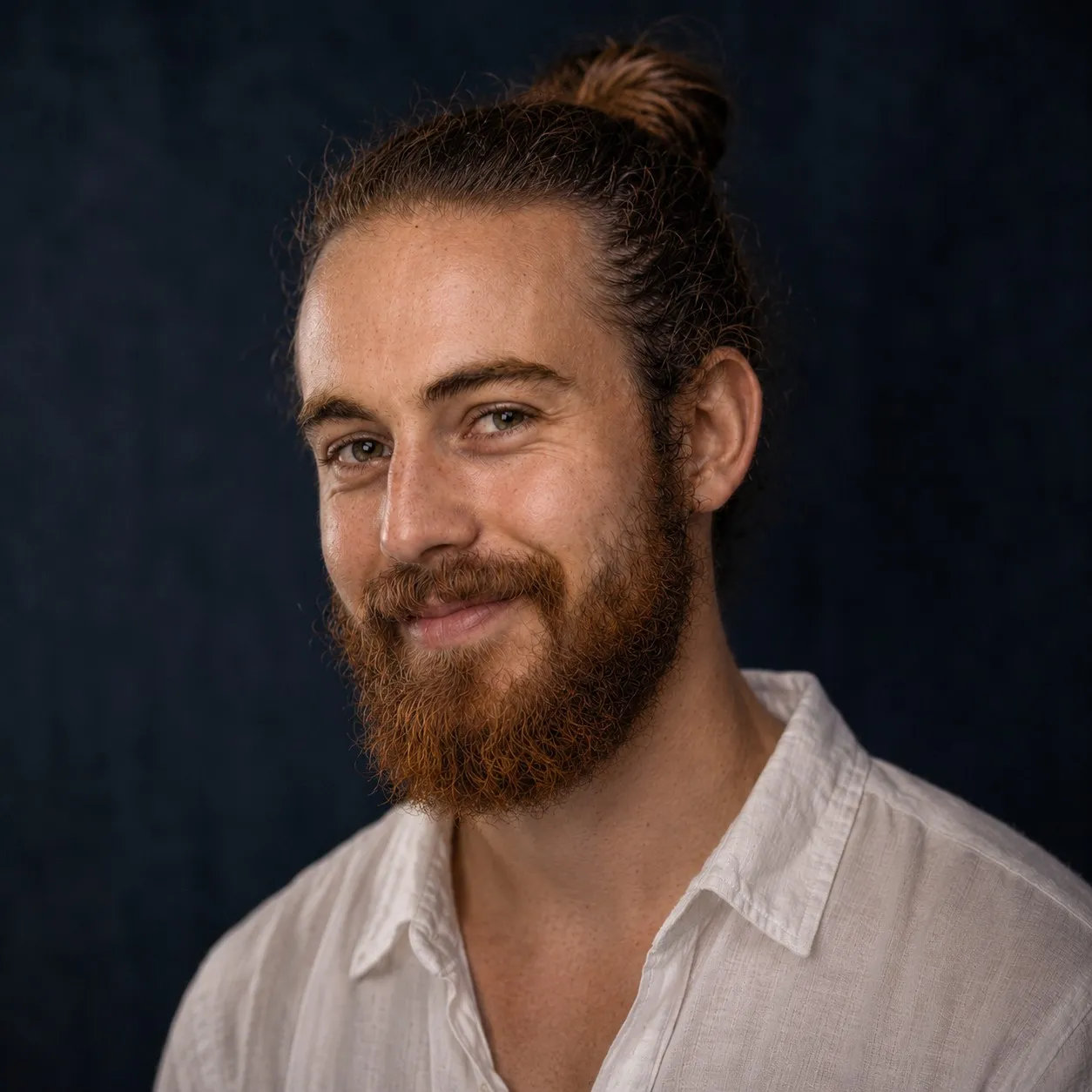
Michael Kaplan
BA Psychology · ASCHP-registered Wellness Counsellor (Reg. 10559)
Group facilitator · Founder of Sangham
Cape Town, South Africa
6 to 8
weekly sessions, with a six-session core and two optional extensions
75 to 90
minutes a session, at a pace the group can hold
6 to 12
participants, with a consistent group strongly preferred
Themes, language, pace and safeguarding are agreed with your team before the first session, and sessions run at your premises, in a room participants already know.
Understanding what sits underneath the pattern
People usually know what they are supposed to do differently. Knowing is not always enough.
Someone may know they should not lose their temper, return to a substance, shut people out, or repeat a relationship that hurts them. They can often explain it clearly afterwards. The harder question, and the one this programme works with, is what happens inside them in the moments just before that behaviour takes over.
So the work begins with lived experience rather than theory. Sessions use conversation, guided reflection, simple experiential exercises and group process to help participants recognise the feelings, needs and survival strategies sitting underneath a familiar pattern. Where an idea from psychology helps someone make sense of what they have just described, it is offered in plain language. It is never the starting point.
Mindfulness is introduced where it becomes useful, and used practically: a way of noticing what is happening in the body, breath, emotions and urges before any of it becomes an automatic action. There is no requirement that anyone believe anything, and no prior experience of meditation is assumed.
The programme is built for real settings. It can be adapted for people navigating recovery, housing instability, family disruption, social exclusion, community violence, difficult relationships or other significant life pressures. The language stays direct, human and accessible throughout.
The aim is to create a little more space between what I feel and what I do next.
If that sounds like the people you work with, a short conversation is the easiest place to start.

How a session actually works
The group is structured, but it is not run like a classroom. Each session moves through roughly the same four movements, with the content changing according to the theme and what the room brings.
Arrive and settle
A short grounding or breathing practice helps the group arrive and become present, before anything is asked of anyone.
Open a real theme
A story, a question, a guided reflection or a simple exercise opens something participants can recognise in their own lives.
Make sense of it together
Participants speak and listen, and begin noticing the connections between experience, emotion, relationship and behaviour.
Practise a different response
Mindfulness, grounding and reflective skills are introduced around what has actually arisen in the room, rather than taught in advance.
Not a lecture
Psychological ideas are introduced in plain language, and only where they help someone understand something they have already experienced.
Not forced disclosure
Participation is invited, never demanded. People are encouraged to work at a pace that is appropriate for them, and silence is a legitimate way to attend.
Not just meditation
Mindfulness is one part of a wider relational process. Its purpose here is practical: to notice, to stay present, and to create more choice.

The experience comes first. The language comes afterwards.
Where the programme fits
The programme suits settings where people are already being supported, and where the work would benefit from a defined block of reflective group time alongside everything else on offer.
Select any setting to read more.
Recovery and substance-use services
Where participants are working with craving, relapse, and the feelings a substance has reliably been used to change.
Shelters and residential programmes
Where housing instability, family disruption and loss of control over circumstances sit underneath daily behaviour.
Youth and community programmes
Where identity, belonging, anger, exclusion and community violence shape how young people learn to protect themselves.
Clinics and community mental-health services
Where a reflective group can sit alongside clinical care and add relational depth between appointments.
NGOs and NPOs running longer-term support
Where a defined block of group work can strengthen an existing programme without competing with it.
Staff and care teams
Where the people doing the work carry a great deal, and would benefit from a reflective space of their own.
What matters more than the category is who will actually be sitting in the room. Working that out is the point of the first conversation.
How the programme moves
Six sessions form the core, with two optional extensions into trust and boundaries, and into integration. Across them the work moves roughly through three movements.
Settling and safety
Group agreements, trust, and an honest look at the different ways people learn to cope with difficult feelings or situations.
What sits underneath
The middle of the programme works with early needs and protection, the faces people show to stay safe, anger and hurt, and what a craving or an avoidance is actually doing for someone.
Carrying it forward
Recognising body cues and urges before action, practising a different response, and naming the personal warning signs, practices and sources of support each participant wants to take with them.
The same programme is not delivered twice
Content, language, pace and emphasis are worked out collaboratively with your team, according to participant needs, culture, literacy, current stability and the support structures already around them. A group of men in a residential recovery programme and a group of young people in a community centre need genuinely different versions of the same process. The full session sequence is agreed with you before the programme begins.
What participants may develop
The programme does not promise a particular clinical outcome, and no honest group programme could. What it is designed to strengthen are small practical capacities that participants can use in ordinary life.
Recognising what is happening
More awareness of feelings, triggers, body cues, and the patterns that tend to follow them.
Putting experience into words
A greater ability to name what is difficult, rather than only acting it out, avoiding it, or shutting it down.
Creating a pause
Simple grounding and mindfulness skills that can help someone notice an urge before automatically following it.
Seeing coping with more compassion
Understanding that a behaviour may have developed for a reason, without removing responsibility for what happens next.
Feeling less alone
Hearing other people name similar fears, contradictions and struggles can reduce isolation and shame.
Healthier ways of relating
Over time the group develops a culture of empathic listening, mutual support and honest communication that participants can carry beyond it.
Understanding does not excuse harmful behaviour. It gives us a better chance of changing it.
Feeling something difficult while remaining safe, connected and witnessed can itself become part of the work.

Working with your team
The programme is not delivered as a fixed package dropped into every setting. Before the group begins, I meet with the relevant staff member or team to understand the population, the current programme, the risks, the language, the culture, and what your organisation actually hopes the group will add.
The first step is understanding who will be sitting in the room.
Where possible, a staff member or social worker who already knows the participants is welcome to join the group. This is encouraged rather than required. Familiar staff involvement helps participants enter the group with more trust, and strengthens the continuity between what happens in the room and the support your organisation provides the rest of the week.
An initial hand-off into the first session is strongly encouraged in every setting. A group that begins with someone the participants already trust in the room tends to settle considerably faster than one that begins with a stranger.
Before
A planning conversation with your team: population, risks, language, culture, and what the group should add.
During
Weekly sessions at your premises, with agreed safeguarding and referral pathways live throughout.
After
A closing review with your team on how the group went and what, if anything, is worth continuing.
Safety, scope and continuity
Group work with people already under pressure has to be held carefully. The following are not conditions to be negotiated at the end; they are how the programme is built.
- Personal sharing is encouraged but never forced.
- Exercises are not designed to push participants into reliving traumatic experiences.
- Clear boundaries, confidentiality expectations and group agreements are established early.
- Safeguarding, referral and escalation pathways are agreed with the host organisation in advance.
- Sessions are adjusted where the group’s needs, literacy level, culture or current stability call for a different pace.
- The programme complements existing clinical, social-work, addiction or other specialist support rather than replacing it.
Scope of practice
This is supportive Wellness Counselling under ASCHP registration, facilitated in a group setting. It is distinct from clinical psychology, psychotherapy, psychiatry and medical treatment, and it does not include diagnosis of psychiatric conditions or the management of medication.
Where a participant needs specialist psychological, psychiatric, addiction, crisis or medical care, that is named directly and handled through the referral pathways agreed with your organisation before the programme starts. Read the full scope and ethics.
A circle, a conversation, and enough time
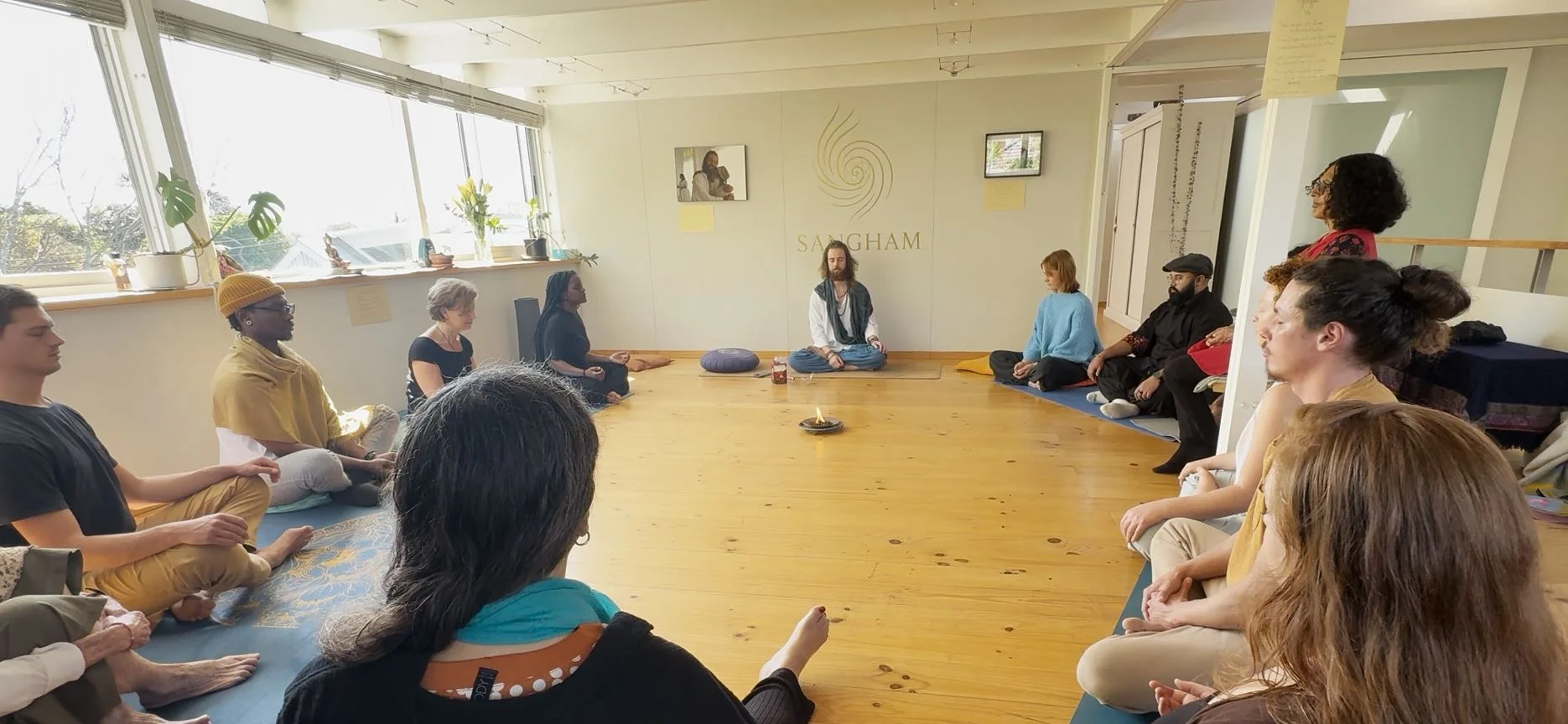
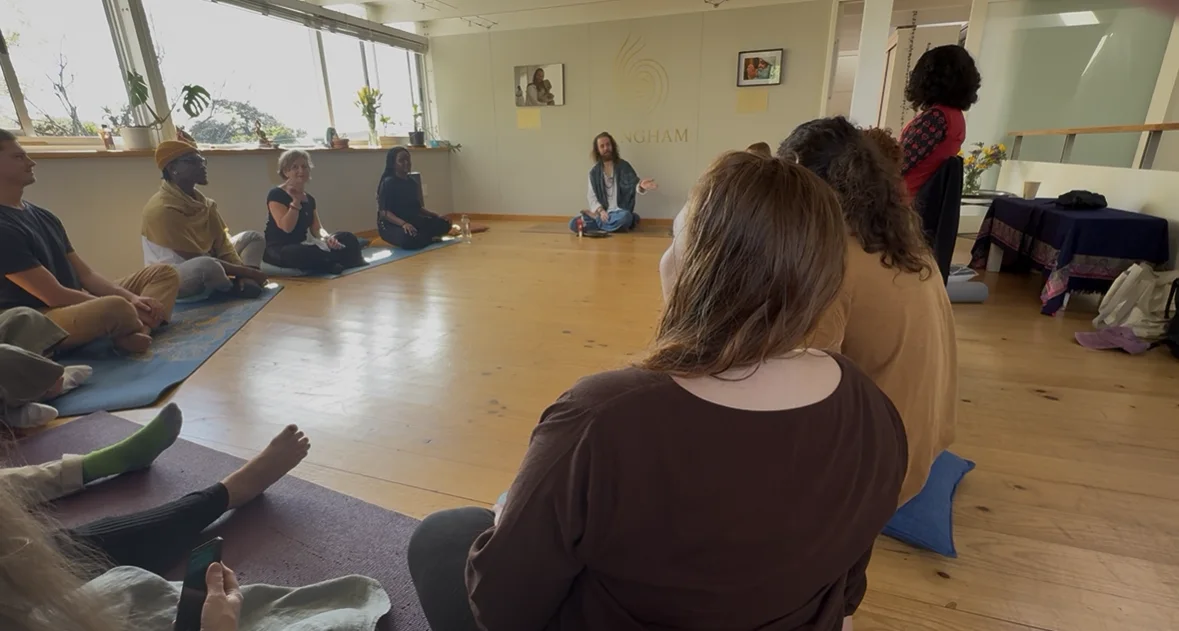
Group work needs very little: a room that can be closed, chairs or cushions in a circle, and the same people returning each week.

About the facilitator
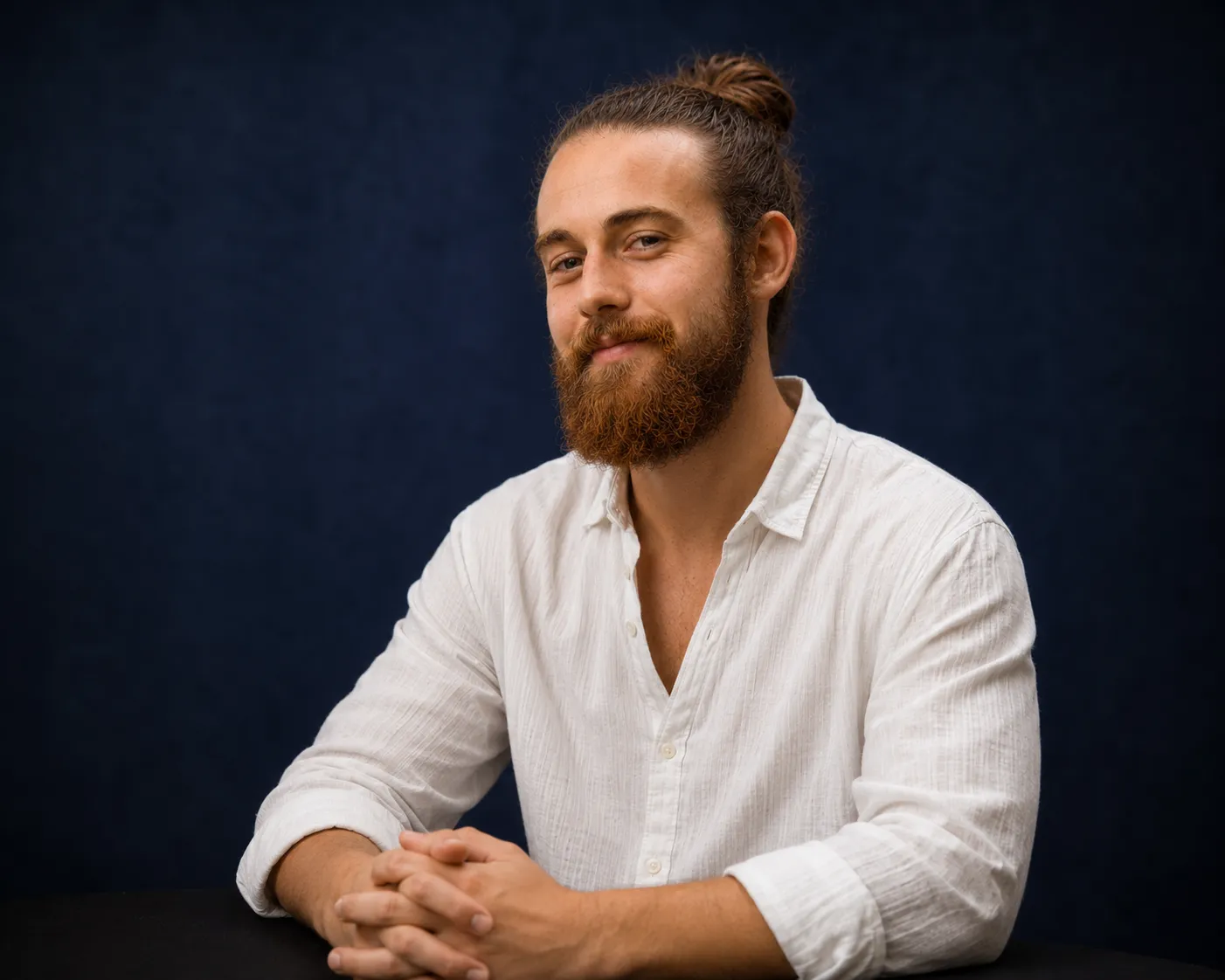
Michael Kaplan
ASCHP-registered Wellness Counsellor (Reg. 10559) · Group facilitator · Founder of Sangham
Michael has more than a decade of experience working with boys and young men through mentoring, group facilitation and counselling, including many years within the Boys to Men community in Cape Town.
His work combines relational counselling, group process, and long experience with mindfulness and contemplative practice. Much of that development took place under the guidance of clinical psychologist Bernard Altman, particularly around adolescent developmental work and group process.
A particular focus of the work is translating psychological and contemplative ideas into experiences people can actually use, without requiring academic language or previous meditation experience.
The emphasis is on meeting people where they are, taking their ways of coping seriously, and helping them develop greater awareness and choice.
A limited pilot
A small number of complete programmes, offered pro bono
The full six to eight week cycle is currently being offered at no cost to a limited number of organisations with a group who could genuinely benefit. This is a defined pilot rather than an open-ended free service, and places are taken as they are agreed.
The reason for running it this way is straightforward. Group work of this kind is best evaluated by the organisations it is meant to serve, in the settings it is meant to run in, rather than described in a proposal.
A first conversation covers who the participants are, what support is already around them, whether a consistent weekly group is realistic in your setting, and how safeguarding would work.
No obligation, and no commitment asked for in a first conversation.
Questions organisations usually ask
Does this replace the clinical or social-work support we already provide?
No. The programme is designed to sit alongside existing clinical, social-work, addiction, community or specialist support, and to add a reflective, relational layer to it. Where a participant needs care that falls outside Michael’s professional scope, referral pathways agreed with your organisation are followed.
Is this trauma therapy?
No. Exercises are not designed to push participants into reliving traumatic material, and the programme is not a substitute for trauma treatment. Where something significant surfaces, it is held carefully in the room and referred on through the pathways agreed with your organisation.
What about participants with low literacy, or who work in another language?
The programme is conversational and experiential rather than written or academic, so it does not depend on literacy. Language, culture, pace and the examples used are all discussed before the programme begins and adjusted as it runs.
Where does the programme run?
Ordinarily at your premises, in a space your participants already know, which is usually the single biggest factor in whether people attend. Programmes run in and around Cape Town. Organisations further afield are welcome to make contact so that practicalities can be discussed.
What does it cost?
A limited number of complete programmes are currently offered on a pro-bono basis to suitable organisations whose participants may benefit. Where a programme falls outside that, it is quoted according to group size, preparation, travel and the length of the cycle. The first conversation is the place to work out which applies.

Grounded group work, for real people and real settings.
Talk about whether the group could fit your organisation
The most useful first step is a conversation about your participants, the support already around them, and whether a weekly group is realistic in your setting. If it is not the right fit, that will be said plainly.
Start by email
Write with a short description of your organisation and the group you have in mind. A few lines is plenty to begin with.
Discuss a programmeOr ask first
Send a WhatsApp message if you would rather ask one question before writing properly. Either route reaches Michael directly.
Message on WhatsAppOr send the details here
Thank you. Your enquiry has been sent.
Michael normally replies within 1 to 2 business days. If you would rather add something in the meantime, WhatsApp reaches him directly.
Contact
Michael Kaplan
michael@sangham.org
073 673 8063
Cape Town, South Africa
Also for organisations
Corporate counselling and workplace wellbeing, for companies funding confidential counselling access and team sessions for employees.
Individual counselling and open workshops remain the main body of the practice.